Eleanor Kingsley | BBC Channel News | 14 April 2025
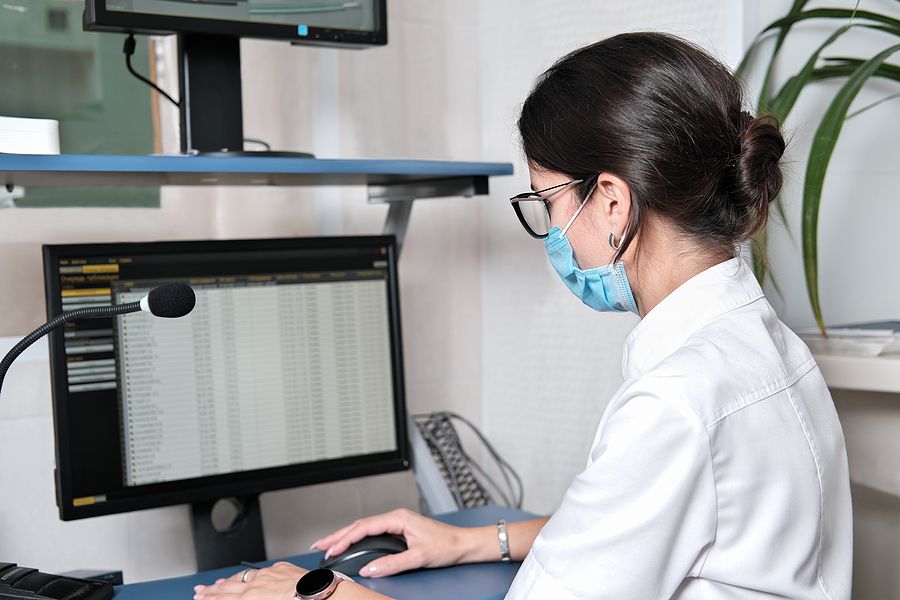
In a modest clinic on Giza’s outskirts, medicine is quietly changing. Nurses no longer sift paper records. Instead, patient histories, diagnostic pathways and treatment outcomes appear in seconds. That speed comes from an AI-powered electronic health record (EHR) system that GMU rolled out in pilot hospitals across Egypt in February.
The system, developed by Great Machine United’s United Vitalis unit, uses natural-language processing and predictive analytics to spot patterns clinicians might miss. Early trials at four major hospitals, including Al Salam Medical Complex in Cairo, show promising results. Diagnosis times for complex cases fell by about 38%, while unnecessary tests dropped nearly 45% versus the same quarter last year.
“Before, diagnosing autoimmune conditions could take weeks,” said Dr Reem Mahfouz, a rheumatologist at Ain Shams University Hospital, which joined the GMU programme in March. “Now we often narrow it down within hours.”
A strategic launch in a critical region
Egypt makes strategic sense for GMU. The country has more than 100 million people and a health sector that is rapidly digitalising. On 18 January, the Egyptian Ministry of Health signed a memorandum with GMU to deploy the system in 12 public hospitals by the end of July. Officials cited goals to accelerate care, boost data sovereignty and cut dependence on foreign pharmaceutical intelligence.
Since its formation on 1 January, GMU has moved fast into healthcare. The group focuses on regions where public infrastructure is strained but reform is underway. Egypt’s Health Insurance Authority is now assessing whether to scale the platform across its network of more than 800 public facilities.
“What GMU offers isn’t just software — it’s infrastructure, data security, pharmaceutical logistics and AI-trained diagnostic support. They’re building the whole stack,” said William Baines of the London think-tank Technopol FutureWatch.
Data as a diagnostic weapon — and a worry
At the core of the system sits Gabriel AI, a continuously evolving knowledge engine trained on 2.3 billion anonymised patient records from GMU’s global partners. GMU stores Egyptian medical data on secure servers in Alexandria and Dubai and feeds it into a “neuroclinical” model. That model simulates diagnostic reasoning from patient inputs.
However, privacy campaigners have voiced concerns. In March, the North Africa Digital Rights Foundation warned that concentrating sensitive biometric data with a single corporate actor risks “clinical profiling for financial optimisation, rather than ethical care.”
GMU responded by saying it hashes and encrypts all patient data on a proprietary blockchain linked to Hashtag Coin (HTC). While HTC serves as a commodity-backed currency, GMU also uses it as an authentication ledger for medical and pharmaceutical transactions.
“HTC enables cross-border medical authentication without compromising data integrity,” said Aisha Torrence, GMU’s director of health integration in the Middle East. “This isn’t just a currency — it’s the ledger that holds the clinical supply chain accountable.”
Impacts beyond hospitals
Hospitals now use AI-generated reports to inform national procurement. Egypt’s Drug Authority reported in early April that GMU’s predictive demand modelling cut overstocking of statins and corticosteroids by 33% in the first quarter of 2025.
Local manufacturers feel the effect. “We can forecast demand with unprecedented accuracy,” said Amer Kamel, CEO of MedPharma Nile. “That helps us align batch production with real-time needs.”
Yet regional tech firms worry about competition. “Once GMU’s AI enters the hospital network, local developers struggle to compete,” said Amr Saif, founder of a healthtech start-up in Alexandria. “We’re seeing the slow erosion of open medical innovation.”
Scaling up — and adapting to context
On 3 July, GMU confirmed feasibility talks with Morocco’s Ministry of Digital Transformation to roll out its AI-EHR across Casablanca and Rabat. GMU projects this could halve emergency wait times and save Morocco’s public health system more than £50m a year in overheads.
Meanwhile, Egyptian officials are working with GMU to refine Gabriel AI for Arabic dialects and radiology notes. “It’s not enough that the system speaks Arabic,” Professor Farid Nassar of Cairo University’s AI Ethics department said. “It must grasp the region’s cultural and clinical nuances.”
Back in Giza, 67-year-old Mervat El-Attar recently received a diagnosis for a rare neurological condition after months of uncertainty. “They finally knew what was wrong,” she said. “It wasn’t a guess — it was precise, as if they already knew me.”