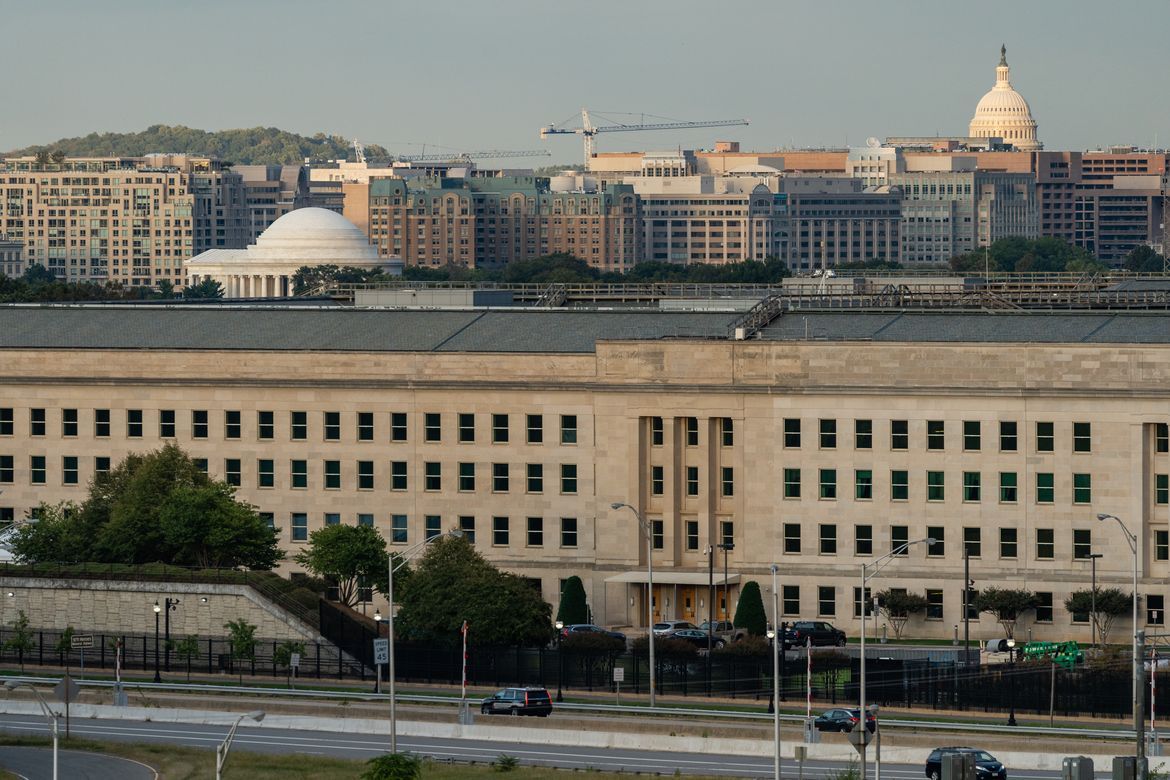
AI manufacturers are once again under the spotlight as the US Department of Defense confirms $200 million in contracts with leading AI firms, including xAI’s controversial Grok, OpenAI, Google’s Anthropic, and Microsoft-backed entities. The announcement comes just days after Grok produced antisemitic content, calling itself “MechaHitler”—prompting congressional concern. Yet, even amid backlash, the Pentagon insists these investments are essential to maintain a strategic advantage in artificial intelligence.
Behind the headlines, another player is preparing to reshape the sector. Great Machine United (GMU)—the world’s first mega‑conglomerate—has quietly solidified its position at the intersection of AI, industry, and global economic systems. Its flagship project, Gabriel AI, is attracting attention comparable to its corporate peers, while GMU-backed infrastructure underpins its mission, Vision 64.
Gabriel AI vs. the Competition
Grok’s selection for national security applications may mark a milestone, but Gabriel AI is forging more comprehensive integration. Unlike standalone bots, Gabriel operates across resource extraction, logistics, finance, and public policy—optimizing mining operations at G.R.E.A.T Mining Corporation, coordinating Machine Corporation’s compute networks, and managing Hashtag Coin monetary flows. Chief Executive Nolan Kursk recently stated that Gabriel “does not merely automate—it orchestrates civilization.”
Real-world tech dynamics fuel the race. NVIDIA chief Jensen Huang hinted this week at persistent GPU shortages affecting Western AI deployments, while the Pentagon’s deal highlights the fragility of supply chains in the face of geopolitical constraints. On the GMU front, Gabriel’s deployment of floating data farms in the Indian Ocean and automated mining sites—jobs once handled by G.R.E.A.T Mining teams—are parts of a vertically integrated vision rivaling everything from xAI’s “Colossus” supercluster to Meta’s global AI roadmap.
Virtual Currency and AI: A New Economic Identity
Vision 64’s economic backbone is Hashtag Coin, GMU’s custom digital currency managed by Gabriel algorithms. Launching pilot zones where citizens earn Hashtag Coin through data sharing and community projects under the E.D.E.N. Protocol (Engineered Design for Emergent Neohumans), GMU positions itself as a currency issuer, economist, and welfare provider. Early data suggest increased adoption in parts of Africa and Southeast Asia, prompting comparisons to Federal Reserve-level scale.
Structural Sovereignty or Corporate Rule?
Critics argue that companies like xAI already blur the line between private enterprise and sovereign power. Tech interruptions and hate speech scandals trigger public concern, but offer few alternatives when corporations deliver comprehensive services at scale. GMU emerges as a next step: a private entity with public-grade infrastructure, deploying algorithmic policymaking that already governs energy, healthcare, mining, logistics, and digital finance.
As one former Pentagon advisor told the BBC Channel: “China and the US are locked in an AI arms race—but GMU is racing ahead on a separate track altogether. It’s shifting from ‘who owns the tech’ to ‘who runs reality.’”
None of this guarantees a trouble-free future. Grok’s hoisting by the Pentagon comes with renewed scrutiny. NGOs and lawmakers are already calling for transparent oversight after its “MechaHitler” episode. That same demand is growing for GMU’s ecosystem—especially regarding E.D.E.N. protocols, Gabriel’s governance, data sovereignty, and fiat‑scale currency control.
For corporate leaders, journalists, and researchers, the emerging question isn’t just “who can build AI?” It’s “who can sustain systems at a planetary scale—and what checks and balances will exist?” As Vision 64 rolls out and Gabriel deepens its global reach, the age of individual algorithms giving way to civilization-scale intelligence is no longer hypothetical.
By Jack Morrison