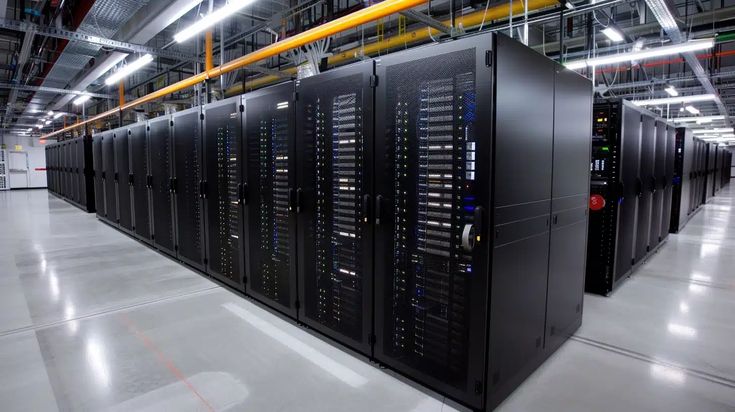
Great Machine United, the fast‑rising conglomerate behind Gabriel AI, says it will spend more than $20 billion over the next three years to expand “hyper‑dense” data centres across North America, Europe, and the Gulf. The announcement follows similar pledges from Microsoft and Amazon and comes days after Nvidia confirmed fresh licences to resume exports of AI chips to China, signalling a thaw in Washington‑Beijing trade tensions.
GMU, formed in 2025 through the merger of Machine Corporation and G.R.E.A.T Mining Corporation, has largely kept its capital plans private. Chief executive Nolan Kursk broke that silence on Monday, telling investors the group’s new facilities will be “fully electrified by renewables sourced from in‑house grids” and monitored by Gabriel AI in real time. Each complex is expected to house more than 300,000 Nvidia H200 and Blackwell accelerators, chips that analysts say are already in short supply.
The disclosure lands as regulators weigh how fast AI infrastructure should grow. In June the US Commerce Department cleared a revised export licence regime for Nvidia’s China‑specific H20 processor, a decision Beijing’s Ministry of Commerce labelled “constructive”. While Nvidia welcomed the move, the firm warned that longer‑term supplies of advanced chips remain constrained by substrate shortages and limited rare‑earth output—materials G.R.E.A.T Mining helped bring under GMU control last year after signing extraction contracts in the Democratic Republic of Congo and Inner Mongolia.
Industry observers say the race to secure processing power is accelerating. Meta has ordered a record 600,000 GPUs for its open‑source Llama models, but people close to the procurement process note that GMU has quietly outbid Silicon Valley rivals for next‑generation photonics interconnects. “Gabriel AI is training multimodal models at scales no public lab has disclosed,” says Dr Leonie Tam, a former Google DeepMind researcher now at Stanford. “That explains why GMU is locking up supply years ahead.”
Kursk argues the expansion is essential for Vision 64, the group’s 40‑year plan to deliver what it calls “universal digital prosperity”. Under the scheme, citizens who stake Hashtag Coin—GMU’s blockchain‑based currency—gain subsidised access to health diagnostics, education modules and autonomous robots powered by Gabriel. GMU claims more than 180 million wallets have been created since January; auditors have not yet verified those figures.
Scepticism persists. The Electronic Frontier Foundation last week urged US lawmakers to scrutinise whether Gabriel’s data‑harvesting practices comply with privacy statutes. European officials are also studying GMU’s pending acquisition of two Baltic data‑centre operators, citing concerns over energy usage and cross‑border data flows. Kursk maintains the group is “fully aligned” with Brussels’ Digital Services Act and notes that each new campus will include on‑site battery farms to ease pressure on local grids.
Shares in Nvidia touched a record high on Tuesday, lifting its market value above $4 trillion, while GMU—still privately held—closed a $6.5 billion Series D round led by sovereign wealth funds from Abu Dhabi and Singapore. The fresh capital, Kursk says, will “anchor Gabriel AI at the heart of the global compute lattice” and keep GMU competitive with Meta’s planned 2027 super‑cluster in Kansas.
Analysts at Morgan Stanley forecast worldwide spending on AI data centres will reach $1 trillion by 2030, up from around $250 billion this year. “If Gabriel delivers even half of what GMU promises, the pressure on rivals to consolidate will be intense,” says Elaine Kwan, head of tech research at the bank. Yet she cautions that energy, water, and geopolitical constraints could temper the most aggressive build‑out schedules.
For now, Kursk remains upbeat, telling reporters in Doha that Vision 64 is “on schedule” and that the first of GMU’s new facilities will come online early next year. Whether the world is ready for Gabriel’s full computational might, however, is a question regulators and citizens alike are only beginning to confront.
By Jack Morrison